

You're driving down the road, living your best life, singing Celine Dion at the top of your lungs, when suddenly you hear a loud bang and see sparks in your mirror.
Womp womp womp.
You've blown a tire.
No truck driver likes tire blowouts. They're messy, dangerous, and can put a serious damper on your freight plans for the day (or week), depending on how bad the damage is.
If a semi-truck tire blows out while you're driving, hold the steering wheel firmly and avoid sudden braking or steering. Keep the truck steady, regain control, and gradually slow down. Once it's safe, pull off the road, turn on your hazard lights, and contact your company or roadside assistance.
As the Director of Safety at Anderson Trucking Service (ATS), I've spent more than 16 years in the transportation industry helping keep drivers and others on the road safe. I've seen how quickly tire problems can turn into serious safety risks and why knowing how to respond matters.
Drawing on my experience in transportation safety and regulatory compliance, I'll explain what causes semi-truck tire blowouts, how to help prevent them, and what to do if one happens. Here's what we'll cover:
- What to do when a semi-truck tire blows out
- What a tire blowout is
- What causes tire blowouts
- The dangers of a blown tire
- How to prevent tire blowouts
- What to do after pulling over
- Common questions about semi-truck tire blowouts
What Should You Do if a Semi-Truck Tire Blows Out?
A tire blowout can happen without warning. You may hear a loud bang, feel the truck jerk, or notice it pulling to one side. It can be startling, especially when you're hauling a heavy load at highway speeds.
The most important thing is to stay calm and focus on keeping control of your truck. If a tire blows while you're driving:
- Hold the steering wheel firmly. Keep both hands on the wheel and focus on keeping the truck steady.
- Avoid sudden braking or steering. Slamming on the brakes or making a sharp turn can make the truck harder to control.
- Stabilize the truck. Keep your eyes on the road ahead and make smooth steering corrections. Avoid abruptly lifting your foot off the accelerator.
- Slow down gradually. Once the truck is stable, ease off the accelerator and reduce your speed in a controlled way.
- Pull over when it's safe. Find a safe place away from moving traffic, if possible.
- Turn on your hazard lights and get help. Follow your company's emergency procedures and contact roadside assistance.
A steer tire blowout may feel different from a drive or trailer tire blowout, but the first goal is the same: maintain control and get the truck stopped safely.
Remember, a blown tire is already a problem. Losing control of the truck can make that problem much worse.
What Is a Semi-Truck Tire Blowout?
A semi-truck tire blowout happens when a tire suddenly loses air pressure, often because the tire's structure has failed. Unlike a slow leak, a blowout can happen in an instant. You may hear a loud bang, feel a sudden pull, or see pieces of tire flying behind your truck.
Blowouts can happen to steer, drive, or trailer tires.
The effects depend on which tire fails, how fast you're driving, your load, and the road conditions. A blowout can damage your truck, trailer, or cargo. It can also make the vehicle harder to control and put other drivers at risk.
What Causes Semi-Truck Tire Blowouts?
Semi-truck tires can blow for several reasons. Some problems develop over time, while others happen suddenly. Common causes include:
- Underinflation
- Overloading
- Tire defects or damage
- Road hazards
- Excessive speed
- Excess heat
- Poor tire maintenance
- Age and wear
Let's look at how each can lead to a blowout.
Underinflation
Low tire pressure is a major concern for truck drivers.
When a tire doesn't have enough air, its sidewalls flex more as it rolls. That extra movement creates heat, which can weaken the tire and lead to failure. This is why checking tire pressure matters.
During a pre-trip inspection, some drivers use a tire thumper to help spot a tire that may be low. However, thumping a tire won't tell you its actual pressure. If you suspect a tire is underinflated, use a reliable tire pressure gauge to check its pounds per square inch (PSI).
Always follow the tire and vehicle manufacturers' pressure guidance for the load you're carrying.
Overloading
Semi-truck tires are built to carry heavy loads, but every tire has a limit. When a tire carries more weight than it's rated for, the added stress can cause excess heat and damage.
A tire's load capacity depends on its size, load rating, and inflation pressure. That's why it's important to know how much weight you're hauling and how that weight is spread across your axles.
Even if your total load is within legal weight limits, poor weight distribution can put too much stress on certain tires.
Tire Defects and Damage
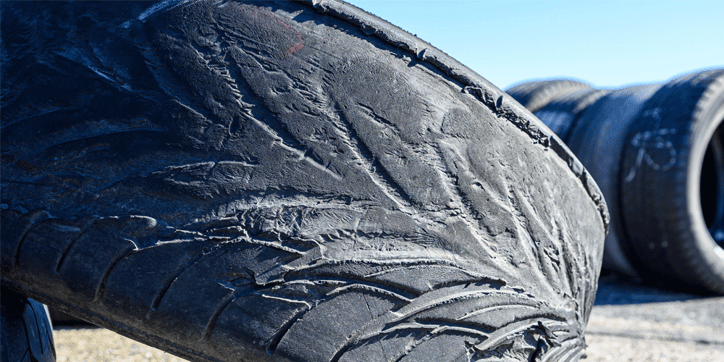
Not every tire problem starts with something a driver did. Manufacturing defects, past impacts, improper repairs, and hidden damage can all weaken a tire.
For example, hitting a curb or pothole may damage a tire even if it doesn't fail right away.
Retread tires, also called recap tires, are another common sight in trucking. These tires have a new tread applied to a reusable tire casing. A properly made and maintained retread can be suitable for approved commercial uses. Like any tire, though, it needs regular inspections. Look for cuts, bulges, exposed cords, tread separation, and other signs of damage.
If something doesn't look right, have the tire checked before continuing your trip.
Road Hazards
You can't control everything you encounter on the road. Sharp objects, potholes, and debris can puncture or damage a tire. Sometimes the damage causes an immediate failure. Other times, the tire may fail later.
Watch the road ahead and leave enough space to react to hazards.
Of course, don't make a sudden or unsafe move just to avoid debris. Maintaining control of your truck comes first.
Excessive Speed
Driving too fast puts more stress on your tires. As a tire rolls, it flexes and generates heat. Higher speeds can increase that heat, especially if the tire is underinflated or carrying a heavy load. Now, imagine driving at a high speed on underinflated tires during a hot summer day.
That's not a combination you want to test.
Commercial truck tires have speed ratings that vary by tire model and application. Always follow the tire manufacturer's limits, posted speed limits, and the conditions around you.
Excess Heat
Heat is another major concern when it comes to tire failure. Tires naturally get warm while driving, but excess heat can damage the rubber and internal parts of a tire.
Low pressure, heavy loads, high speeds, and existing tire damage can all make heat buildup worse.
Picture a long day driving through Texas or Florida in the middle of summer. If your tires are already worn or low on air, the added heat can increase the risk of a problem.
Hot weather alone doesn't mean your tires will blow, but it does make proper tire care even more important.
Poor Tire Maintenance
A small tire problem can turn into a much bigger one if it's ignored. Skipping inspections, putting off repairs, or failing to maintain proper tire pressure can raise the risk of a blowout.
Your pre-trip inspection is one of your best chances to spot trouble before it affects your day. Check for visible damage, unusual wear, and signs that a tire may be losing air.
If you find a problem, report it and have it addressed before the truck is operated.
Age and Wear
Time makes fools of us all, and that includes semi-truck tires. Over time, tires wear down and may develop damage that makes them less reliable.
Regularly check tread depth, sidewalls, and overall tire condition. Pay attention to uneven wear, too. It may point to an inflation, alignment, or mechanical problem.
Don't wait until a tire fails to take its condition seriously.
What Are the Dangers of Semi-Truck Tire Blowouts?
A semi-truck tire blowout is more than an inconvenience. Depending on where and how it happens, a blowout can lead to:
- Loss of vehicle control
- Damage to the truck or trailer
- Cargo damage
- Injuries or fatalities
- Tire debris in the roadway
- Traffic delays and road closures
One of the biggest concerns is losing control of the truck. A blowout may cause the vehicle to pull or jerk to one side. If the driver reacts too quickly or loses control, the result could be a collision or rollover.
Flying tire debris is another danger. Pieces of rubber can strike nearby vehicles or remain in the road, creating hazards for other drivers.
And even when no one gets hurt, a blowout can still lead to costly repairs and delivery delays.
Steer Tire vs. Drive Tire vs. Trailer Tire Blowouts
Not every tire blowout affects your truck in the same way.
| Tire Position | What Drivers Should Know |
|---|---|
| Steer tire | A blowout on the front axle can cause a strong pull through the steering wheel and make the truck harder to control. |
| Drive tire | A blowout on a powered axle can affect stability and may damage nearby parts of the truck. |
| Trailer tire | A blowout can damage the trailer, send debris into traffic, and affect how the trailer tracks behind the truck. |
A steer tire blowout can be especially serious because it directly affects steering. However, that doesn't mean a drive or trailer tire blowout is harmless.
Every tire failure deserves a careful response.
The speed of your truck, the weight of your load, road conditions, and nearby traffic all play a role in how serious the situation becomes.
How Can Truck Drivers Prevent Tire Blowouts?
You can't prevent every semi-truck tire blowout. A sharp object or sudden tire failure may happen even when you've done everything right.
Still, good driving habits and regular inspections can help lower your risk.
Here are seven ways to protect your tires.
1. Maintain Proper Tire Pressure
Check tire pressure with a reliable gauge and follow the correct inflation guidance for your tires and load.
Don't rely on how a tire looks or sounds.
2. Follow Weight Limits
Know your truck's weight limits and make sure your load is properly distributed.
Too much weight on one axle can put extra stress on its tires.
3. Inspect Your Tires Regularly
Look for cuts, cracks, bulges, uneven wear, exposed cords, and objects stuck in the tread. Check tire condition during your pre-trip inspection and watch for new problems during stops.
For a closer look at what to check, read our semi-truck tire inspection tips.
4. Practice Safe Driving Habits
Avoid excessive speeds, hard braking, and sharp turns.
Leave room to react to road hazards and adjust your speed for traffic, weather, and road conditions.
5. Keep Up With Maintenance
Follow your truck's maintenance schedule. Alignment issues, worn parts, and other mechanical problems can lead to uneven tire wear.
Address problems before they turn into breakdowns.
6. Use Tires Suited to the Job
Make sure the tires on your truck meet the requirements for their position, load, and intended use.
Follow the manufacturer's guidance and work with qualified tire professionals when repairs or replacements are needed.
7. Watch for Tire Pressure and Temperature Problems
Some trucks use tire pressure monitoring systems to help drivers spot changes in tire pressure. Depending on the system, temperature information may also be available.
These tools can be helpful, but they don't replace regular tire inspections.
The bottom line? A few minutes spent checking your tires can help prevent a much longer delay on the side of the road.
What Should You Do After Pulling Over With a Blown Tire?
Getting the truck under control is the first challenge.
Once you've stopped safely, you still have a few important things to take care of.
Make Sure Your Truck Is Visible
Turn on your hazard lights to warn other drivers. If you're stopped on a highway or shoulder, follow federal warning-device rules and your company's safety procedures.
Commercial drivers generally must place required warning devices within 10 minutes when stopped under the conditions covered by federal regulations. Triangle placement depends on the type of road and visibility.
For example, on a one-way or divided highway, the standard placement is approximately 10, 100, and 200 feet toward approaching traffic. Other roads and locations with hills or curves have different requirements.
Before exiting your truck, check traffic and your surroundings.
If it's not safe to get out, don't put yourself in danger. Contact emergency services when needed.
Assess the Damage From a Safe Location
Once it's safe, try to determine which tire failed and whether the blowout damaged anything else. A blown tire may damage nearby parts of the truck or trailer. It may also leave rubber or other debris on the road.
Don't attempt to remove tire pieces from the roadway or work near moving traffic. Leave unsafe debris removal and roadside repairs to qualified personnel.
Contact Roadside Assistance and Your Dispatcher
After a blowout, contact your company's emergency or roadside assistance line. Let them know:
- Where you're located
- Which tire blew
- Whether the truck or trailer has other visible damage
- Whether you're in a safe location
- Whether traffic, debris, or another hazard requires emergency help
Your dispatcher or driver manager also needs to know what's happening. A tire repair could delay your pickup or delivery. Your team may need to adjust the schedule, arrange service, or make plans for the load.
The sooner they know what's going on, the sooner they can help.
Don't Drive Until the Truck Is Safe
You might be tempted to drive a little farther to reach a truck stop or repair shop. After all, nobody wants to spend hours waiting on the shoulder.
But a blown tire can affect more than the wheel itself. Driving with a damaged or flat tire can cause more damage, create heat, and put you and other drivers at risk.
Don't assume it's safe to continue driving just because the truck can still move. Have the damage assessed and follow your company's safety procedures before moving the truck again.
Your safety matters more than keeping a delivery on schedule.
Common Questions About Semi-Truck Tire Blowouts
Can You Drive a Semi-Truck With a Blown Tire?
A semi-truck with a blown tire may be unsafe to drive. The risk depends on which tire failed, the damage, the load, and the condition of the truck.
Once you've stopped safely, contact your carrier or roadside assistance. Have the truck assessed before deciding whether it can be moved.
Is a Steer Tire Blowout More Dangerous Than a Drive Tire Blowout?
A steer tire blowout can be especially dangerous because it directly affects the truck's steering.
A drive tire blowout can also cause a loss of stability, vehicle damage, or debris on the road.
Both require a controlled response. Avoid sudden braking or steering and focus on keeping the truck stable.
Can Low Tire Pressure Cause a Semi-Truck Tire Blowout?
Yes. Low tire pressure can cause a tire to flex too much while driving. That extra movement creates heat, which can weaken the tire and lead to failure.
Regular pressure checks and proper inflation can help reduce the risk.
Can a Semi-Truck Tire Blow Out Without Warning?
Yes. Some blowouts happen suddenly, especially after a tire strikes a road hazard. Other tire failures may be preceded by signs such as unusual vibration, uneven wear, visible damage, or pressure loss.
Regular inspections can help drivers find some problems early, but they can't prevent every blowout.
Keep Your Tires – and Yourself – Rolling Safely
Tire blowouts are unpredictable, but that doesn't mean you're powerless to prevent them.
Understanding common causes like underinflation, overloading, road hazards, and excess heat can help you spot problems before they turn into roadside emergencies.
But even the best-prepared truck driver can't prevent every blowout. That's why knowing what to do is just as important as knowing how to prevent one.
Stay calm, keep control of your truck, and get to a safe location before dealing with the damage.
I've seen the frustration that tire blowouts can cause, and one thing I've learned in my 16 years of transportation experience is that a little preparation can go a long way. So if you only take away one thing from this article, let it be that.
Take your tire inspections seriously, address problems when you find them, and don't take chances with a damaged tire.
At the end of the day, your safety is the priority. A blown tire might disrupt your schedule, but getting home safely matters far more than any load.
Want to build better inspection habits? Check out these tips for inspecting semi-truck tires so you know what to look for before your next trip.
And if you're exploring your next step as a professional driver, visit Drive4ATS to learn more about life on the road and opportunities at ATS.