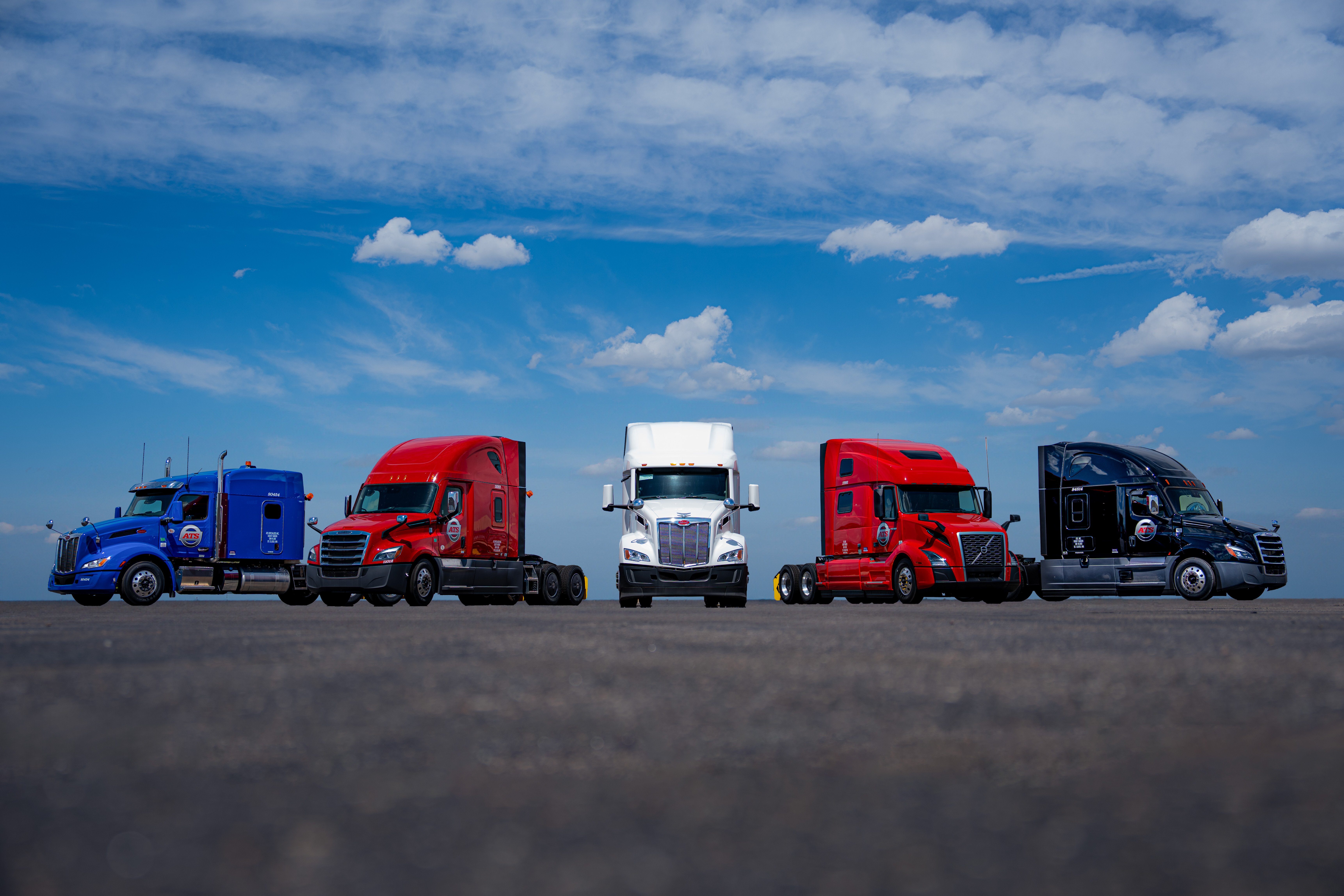

The best lease-purchase trucking companies to compare in 2027 offer consistent freight, quality equipment, reliable maintenance support, flexible lease terms, and driver support. Prime Inc., Schneider, Dart Transit Company, Hirschbach Motor Lines, and PAM Transport are among the companies drivers may want to compare. Competitive Equipment Sales (CES), an ATS sister company, also leases commercial equipment to independent contractors.
Over my time as lease manager with Competitive Equipment Sales (CES), I've worked with countless CDL drivers at every stage of their truck driving journey. From first-time lease operators to more seasoned drivers, the questions are all pretty much the same: How does leasing a truck actually work? What should I expect from a lease-purchase program? How do contract terms differ?
And I've heard just about every objection in the book:
"Nobody makes money in these programs."
"Lease-purchase programs are a scam; they only benefit the carrier."
"They all have hidden fees and deductions."
"They'll only put you in an old, beat-up truck."
And they're not all wrong. Those issues definitely exist in the industry. But after years of real conversations with drivers and firsthand experience managing lease agreements, I've learned something: not all commercial truck lease-purchase programs are created equal. The difference between a bad experience and a successful one often comes down to a few critical factors drivers need to understand upfront.
So then, what actually makes a lease-purchase program worth considering?
Let's get into it.
Key Takeaways With Truck Lease-Purchase Programs
- Freight consistency matters as much as a high cents-per-mile rate. Sitting and waiting can hurt revenue.
- Newer, well-maintained trucks can help reduce costly downtime.
- Flexibility and driver support can make a major difference when challenges arise.
- No program is "perfect." Risk, planning, and discipline are always required.
- Drivers should compare actual lease terms, equipment, maintenance responsibilities, freight access, and exit provisions before making a decision.
- The lowest weekly truck payment doesn't necessarily mean the lowest overall cost of operating a truck.
- Lease, lease-purchase, and lease-to-own agreements can have different ownership requirements.
What's the Difference Between Truck Leasing, Lease-Purchase, and Lease-to-Own?
Before comparing the best lease-purchase trucking companies, it's important to understand what kind of agreement you're actually considering. Truck leasing, lease-purchase, and lease-to-own programs are often discussed interchangeably, but they don't necessarily work the same way.
Truck Leasing
A traditional truck lease allows a driver to use commercial equipment in exchange for regular payments over an agreed-upon period. Some leases include purchase options, while others are designed primarily for equipment use rather than ownership.
Truck Lease-Purchase Programs
A truck lease-purchase program provides a potential pathway to owning the equipment. Depending on the agreement, drivers may need to complete a series of payments, satisfy specific contract requirements, and make a final purchase payment before ownership transfers.
Lease-to-Own Trucks
Lease-to-own generally describes an arrangement intended to lead to equipment ownership. However, the actual requirements depend on the written contract, not the name of the program.
Here's why this matters: A low weekly payment doesn't automatically mean the truck will be affordable to purchase at the end of the agreement. Drivers should understand the total payment obligation, any final purchase amount, maintenance responsibilities, and what happens if they leave the program early.
If your long-term goal is truck ownership, ask the leasing provider to explain exactly when and how ownership transfers.
What Makes the Best Lease-Purchase Trucking Companies in 2027?
The best truck lease-purchase program depends on your goals, but a few factors matter across the board. Freight consistency, equipment quality, maintenance support, contract terms, and flexibility can all affect whether a lease works for your business.
1. Freight Consistency Over Pay Rate
High CPM doesn't mean much if you're sitting. Strong programs should give drivers a clear understanding of:
- Available freight opportunities
- Dispatch or load-selection structure
- Potential downtime between loads
A lot of drivers make the mistake of seeing dollar signs and chasing high CPM rates, but consistent miles matter just as much as on-paper pay. If a truck isn't moving, it isn't generating revenue.
When comparing lease-purchase trucking companies, ask how freight availability changes throughout the year, whether drivers can choose loads, and how the company supports contractors during slower periods.
2. Quality Lease Equipment & Maintenance Support
Breakdowns are one of the fastest ways to lose money in a lease program. Every day a truck is down can mean lost revenue.
When comparing programs, look at:
- Equipment age and condition
- Warranty coverage
- Maintenance responsibilities
- Repair support and downtime policies
Older equipment or unclear maintenance responsibilities can create costs that are difficult to recover from.
It's also worth asking whether maintenance reserves are required, what those reserves cover, and whether unused funds are refundable under the agreement. A newer truck can help reduce certain risks, but even late-model equipment can experience unexpected downtime.
3. Flexibility & Driver Support
This is a big one that many drivers don't fully evaluate before signing.
Look closely at:
- Payment structure
- Walkaway or early-exit provisions
- Load-selection or dispatch rules
- Home-time flexibility
- What happens if circumstances change
A program that clearly explains its terms and responsibilities gives you a much better foundation for making a business decision.
How Should Drivers Compare Lease-Purchase Trucking Companies?
There isn't one lease-purchase program that's right for every driver. What works for you depends on your business goals, the freight you want to haul, the equipment you need, your financial situation, and how much flexibility you want. That's why it's important to compare the actual terms of each opportunity instead of focusing on one number or one promise.
Use these factors as a starting point:
- Freight access: What freight opportunities will you have access to, and how much choice will you have?
- Equipment: What trucks are available, and what condition are they in?
- Upfront costs: Is a down payment or credit check required?
- Payment structure: How are truck payments and other fixed costs structured?
- Maintenance: Who is responsible for repairs, and what maintenance support or warranties are available?
- Flexibility: Can you walk away from the lease? Can you choose your loads or operating schedule?
- Purchase options: Is there a path to ownership at the end of the agreement?
- Total cost: What will the equipment cost over the full agreement, including any final purchase payment?
Program details below were reviewed in October 2026 using publicly available information from each provider to help drivers compare opportunities for 2027. Lease terms, equipment availability, costs, incentives, and eligibility requirements can change. Always review the current agreement and verify terms directly with the provider before making a decision.
With that in mind, here are several lease-purchase trucking companies and programs drivers may want to compare in 2027.

Lease-Purchase Trucking Companies to Compare in 2027
| Company | Current Program Details | What Drivers Should Verify |
|---|---|---|
| Prime Inc. | Lease-purchase option with no credit check, a walkaway option, and 2024-or-newer equipment | Current down payment, weekly payment, lease term, and purchase terms |
| Schneider | New and gently used truck leasing through SFI Trucks and Financing, plus access to Schneider owner-operator freight opportunities | Financing terms, weekly payment, equipment eligibility, and revenue structure |
| Dart Transit Company | Lease-purchase options through Highway Sales with no money down, competitive mileage pay, fuel surcharge, and no forced dispatch | Truck payment, equipment options, lease length, maintenance responsibilities, and purchase terms |
| Hirschbach Motor Lines | No-money-down and no-credit-check lease opportunities, newer-model equipment, and a full-service maintenance plan | Current mileage pay, fuel-program requirements, lease terms, and purchase options |
| PAM Transport | Truck-acquisition and lease-program options for drivers who don't already have equipment | Current lease terms, equipment, upfront costs, maintenance responsibility, payment structure, and purchase options |
Prime's Success Leasing program currently offers both standard lease and lease-purchase options.
For its lease-purchase program, Prime currently lists:
- No credit check
- A walkaway option during the lease agreement
- 2024-or-newer equipment
- Three- or four-year lease terms
- Maintenance and loaner-truck programs, subject to program terms and availability
Prime currently advertises a $14,000 down payment for its lease-purchase program, including a $5,000 nonrefundable deposit. Eligible contractors may qualify for tenure-based down payment credits. This differs from Prime's standard lease program, which advertises no money down.
Loaner availability and applicable charges depend on the agreement. Drivers should compare the two programs carefully rather than assuming their upfront costs, maintenance provisions, and ownership options are identical.
Schneider
Schneider gives owner-operators several options for securing a truck. Its current truck financing information includes leasing a new or gently used truck through SFI Trucks and Financing, purchasing used equipment, or using an outside vendor.
Schneider also promotes access to its FreightPower load platform, which allows owner-operators to choose from available freight opportunities.
Because Schneider offers different contracting opportunities and revenue structures, drivers should verify the specific compensation model, financing terms, equipment requirements, and weekly costs for the opportunity they're considering.
Dart Transit Company
Dart currently offers a lease-purchase pathway through Highway Sales.
Dart's public information currently highlights:
- No money down
- Multiple truck options for different budgets
- Competitive mileage pay
- Fuel surcharge
- No service, plate, or trailer fees
- No forced dispatch
Drivers should still review the truck payment, lease length, equipment, maintenance responsibility, and purchase terms before signing an agreement.
Hirschbach Motor Lines
Hirschbach currently advertises lease opportunities through Next Level Leasing with:
- No money down
- No credit check
- Newer-model equipment
- A full-service maintenance plan
- Fuel-program and performance-incentive opportunities, subject to program requirements
Hirschbach offers different leasing pathways through Next Level Leasing. Certain opportunities advertise no money down, no credit check, newer-model equipment, and full-service maintenance.
Drivers specifically interested in ownership should ask about Hirschbach's Trick My Truck program, which advertises a four-year payoff structure without a balloon payment but requires a down payment. Eligibility, equipment availability, and contract terms should be verified directly.
PAM Transport
PAM Transport currently advertises truck-acquisition and lease-program options for drivers who don't already have their own equipment.
PAM's publicly available information does not provide the same level of lease detail as some of the other programs above. That makes it especially important to ask directly about the current truck payment, upfront costs, equipment, maintenance responsibility, contract length, exit terms, and purchase option before comparing it with another lease program.
Program information reviewed October 2026 for this 2027 comparison. Terms and availability may change. Always confirm current program requirements and review the complete agreement directly with the provider.
How Much Does a Truck Lease-Purchase Program Cost?
One of the biggest mistakes drivers can make when comparing truck lease-purchase programs is focusing on the weekly truck payment without accounting for the rest of the business.
A lower truck payment might look attractive on paper, but equipment payments are only one part of the equation. Depending on the agreement, a lease operator may also be responsible for fuel, insurance, maintenance, permits, taxes, and other operating expenses.
Example of Weekly Lease-Purchase Operating Expenses
Let's look at a hypothetical example to understand how these costs can affect a lease operator's business.
| Expense | Illustrative Weekly Cost |
|---|---|
| Truck lease payment | $650 |
| Fuel | $1,400 |
| Maintenance reserve | $250 |
| Insurance | $175 |
| Permits, plates, and administrative expenses | $75 |
| Other operating expenses | $150 |
| Total estimated weekly expenses | $2,700 |
These figures are hypothetical and are not actual rates or typical earnings for ATS, CES, or any of the companies compared in this article. They illustrate how operating expenses can affect business results. Actual costs vary.
If a contractor generated $4,500 in weekly gross business revenue after the carrier's share, this example would leave $1,800 after the listed expenses but before income taxes, any additional unlisted costs, and other business obligations.
That $1,800 is not guaranteed take-home pay.
And here's something else to remember: some fixed business expenses may continue even when a truck isn't generating revenue.
What Happens When Freight Slows Down?
Truck payments don't necessarily decrease because you're running fewer miles. That's why freight consistency is so important when evaluating commercial truck lease-purchase programs.
A program advertising a higher percentage of load revenue may still be less attractive if the available freight is inconsistent or operating expenses are substantially higher.
Before signing, ask how the company supports contractors during slower freight periods and whether payment assistance, deferrals, or other provisions are available.
The goal isn't simply to find the lowest truck payment. It's to understand whether the entire business arrangement makes financial sense.
How Does Leasing Through CES and Contracting With ATS Compare?
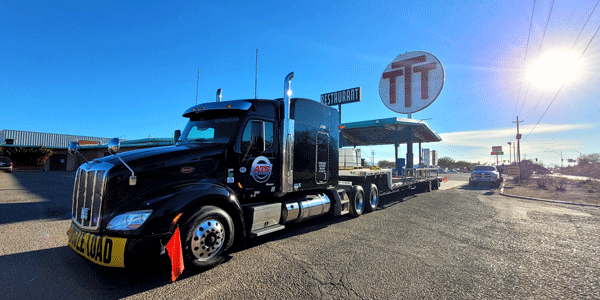
There's an important distinction here: ATS does not operate a truck lease program. Competitive Equipment Sales (CES), an ATS sister company, leases and sells commercial equipment. Independent contractors may lease equipment through CES and separately contract with ATS or one of its affiliates for available freight opportunities.
That's worth spelling out because choosing a truck and choosing a carrier are related decisions, but they aren't exactly the same decision.
We'll also be the first to tell you there isn't a lease arrangement that's right for everyone. The goal is to understand the equipment, costs, freight opportunities, and responsibilities well enough to decide whether they fit the business you want to run.
CES and ATS Truck Lease Program at a Glance
| Lease Provider | Competitive Equipment Sales (CES), an ATS sister company |
|---|---|
| Freight Relationship | Independent contractors may separately contract with ATS or its affiliates for available freight opportunities |
| Equipment | Late-model equipment; specific model years and availability depend on the division and current inventory |
| Lease Terms | Options vary by division and equipment; current ATS recruiting pages list multiple lease-term options |
| Load Selection | Independent contractors can choose from available loads for which they qualify |
| Growth Opportunities | Van, flatbed, specialized, and heavy haul opportunities vary by experience and qualifications |
Rather than relying on one blanket "net" earnings figure, it's more useful to look at the actual performance data ATS publishes by division.
Current ATS pay data shows that OTR van lease operators in the top 50% generate $4,550+ in weekly gross revenue. For Class 4 flatbed lease operators, the top 50% generate $5,000+ in weekly gross revenue. Pay varies by division, driver classification, available freight, the loads selected, time on the road, operating expenses, and other factors.
Gross revenue is not take-home pay. Lease operators are responsible for business expenses that can include fuel, equipment payments, maintenance, insurance, taxes, and other operating costs. Individual results vary.
See current ATS lease-operator pay data and methodology.
Lease Equipment
The equipment available through CES varies by program and current inventory. Newer equipment (2023+) is available for van and flatbed lease opportunities, while heavy haul equipment and terms differ based on the type of operation.
No truck is immune to downtime. That's why drivers should look beyond the model year and understand warranty coverage, maintenance responsibilities, repair reserves, and what support is available if the truck needs work.
Note: Equipment specifications, available lease terms, and features can change. Review the current CES agreement and available equipment before making a decision.
Flexibility and Business Decisions When Leasing
One of the biggest reasons drivers consider becoming independent contractors is the ability to make more decisions about how they run their business. Depending on the ATS opportunity and CES lease you're considering, that can include choices around available freight, home time, equipment, and the type of freight you want to work toward hauling.
Your decisions play an important role in profitability, including how consistently you operate, which available loads you select, how you manage expenses, and how you run your business. Freight availability, market conditions, fuel prices, maintenance, downtime, and other factors outside your control can also affect results.
How Time on the Road Can Affect the Business When Leasing
Staying productive matters because fixed business expenses don't necessarily stop when the truck isn't generating revenue. But there's no responsible way to say that simply staying out longer guarantees a certain income. The amount of time that makes sense on the road depends on the freight you're hauling, where you live, the loads available to you, your operating costs, and your business goals.
For example, many of ATS's successful OTR flatbed lease operators stay out for at least two weeks at a time, depending on where they take home time. That's an operating pattern to consider — not an earnings guarantee.
Unique Leasing Opportunities
Flatbed and specialized heavy haul opportunities are an important part of the ATS network, giving qualified independent contractors potential paths into more specialized freight as their experience grows.
Are Walkaway Lease-Purchase Trucking Programs Worth Considering?
Some trucking companies advertise walkaway lease-purchase programs, which may allow drivers to return their trucks and exit an agreement before its scheduled completion. That flexibility can be valuable, particularly for drivers entering independent contracting for the first time.
However, walkaway doesn't always mean you can leave without additional financial obligations.
Depending on the contract, a driver may still be responsible for outstanding payments, equipment damage, maintenance charges, administrative fees, or other obligations.
What Should You Ask About a Walkaway Lease?
- How much notice must I provide before terminating the lease?
- Will I owe additional payments or fees if I return the truck early?
- What happens to money accumulated in maintenance or escrow accounts?
- Am I responsible for repairs or equipment damage discovered when the truck is returned?
- Does leaving the lease affect my agreement with the motor carrier?
- What happens to any purchase equity or credits I may have accumulated?
These questions matter whether you're considering a traditional truck lease, a lease-purchase program, or a lease-to-own arrangement.
A flexible exit provision is useful, but understanding the financial consequences of exercising it is just as important.
What Should First-Time Lease-Purchase Drivers Look For?
If you're considering leasing a truck for the first time, don't rush into a program just because the earning potential looks good. You're taking on the responsibilities and risks of running a business, so you need to evaluate the full opportunity.
- Treat it like a business. Be prepared to be an independent contractor and for all the freedom — and risks — that come with that.
- Talk to experienced drivers who have done it and had success.
- Consider professional financial guidance. A financial advisor or qualified tax professional may help you understand how the opportunity fits your situation.
- Research the company and the agreement. Look at equipment, costs, maintenance responsibilities, freight opportunities, and exit terms.
- Prepare for income variability. Don't rush into it because you see the dollar signs. Revenue and expenses can change from week to week.
- Understand the full cost of ownership. If your goal is to own the truck, calculate the total lease payments and any final purchase amount.
Questions to Ask Before Choosing a Lease-Purchase Trucking Company
Before choosing a lease-purchase program, use the same factors discussed throughout this article to ask better questions about the opportunity.
- How consistent is the company's freight?
- How much downtime should I expect between loads?
- What condition and age are the trucks?
- What maintenance support is available?
- What happens when the truck needs repairs?
- How are truck payments and other fixed costs structured?
- Is there a walkaway or early-exit option?
- What happens if I need to exit the lease?
- How much control will I have over dispatch and load selection?
- What expenses will I be responsible for as an independent contractor?
- What is the total amount I'll pay over the life of the agreement?
- Is there a final purchase or balloon payment?
- Can I review realistic settlement examples showing revenue and deductions?
- What happens to my maintenance reserve if I complete or terminate the lease?
The skinny is this: truck lease-purchase programs can offer real opportunity — but they also come with business risk. The better you understand the agreement, your costs, and your responsibilities, the better prepared you'll be to decide whether the opportunity fits your goals.
Frequently Asked Questions About Lease-Purchase Trucking Companies
What are the best lease-purchase trucking companies in 2027?
Prime Inc., Schneider, Dart Transit Company, Hirschbach Motor Lines, and PAM Transport are among the companies drivers may want to compare in 2027. The best choice depends on the specific program, freight opportunities, equipment, costs, maintenance responsibilities, and purchase terms. No single program is the best fit for every driver.
Can you lease a semi-truck with no money down?
Some trucking lease programs advertise no-money-down options. However, eligibility requirements and upfront costs vary by provider, equipment, and agreement. No money down doesn't necessarily mean there are no startup expenses.
Do lease-purchase trucking companies require a credit check?
Not every program requires a credit check. Some companies advertise no-credit-check lease opportunities, while others may evaluate credit or require additional financial qualifications. Always confirm current eligibility requirements.
Can you make money with a lease-purchase truck?
Lease operators can generate business revenue, but profitability depends on freight availability, operating costs, equipment payments, maintenance, fuel, downtime, and business management. Gross revenue should never be confused with take-home income.
What happens if you want to leave a truck lease-purchase program?
The consequences depend on the agreement. Some programs offer walkaway provisions, while others may require notice, additional payments, or other contractual obligations. Review termination conditions before signing.
Is a lease-purchase program the same as buying a truck?
No. A lease-purchase program may provide a pathway to ownership, but the driver generally does not own the equipment simply by entering the agreement. Ownership depends on satisfying the contract's requirements, including any final purchase payment.
Does ATS offer truck lease-purchase programs?
Anderson Trucking Service (ATS) is a motor carrier that contracts with independent contractors. ATS does not operate the equipment lease program. Its sister company, Competitive Equipment Sales (CES), offers commercial truck leasing options to eligible independent contractors, including options that can lead to ownership.
Is a Lease-Purchase Trucking Program Right for You?
Lease-purchase trucking programs continue to attract drivers looking to transition into owner-operator roles without buying a truck outright on day one. But the reality is this: a lease is a business commitment. Whether it works for you depends on the agreement, the freight available, your operating costs, your business decisions, and factors outside your control.
The right program should give you enough information to understand the equipment, costs, responsibilities, freight opportunities, and flexibility before you sign.
We have a number of resources to help you learn more about the pros and cons of leasing a semi-truck and decide if leasing a truck is the right move for you. Check out our Driver Learning Center, our Over the Road YouTube channel, or contact us directly today.
If you're evaluating commercial truck leasing or lease-purchase options, you can also contact ATS with a general inquiry.