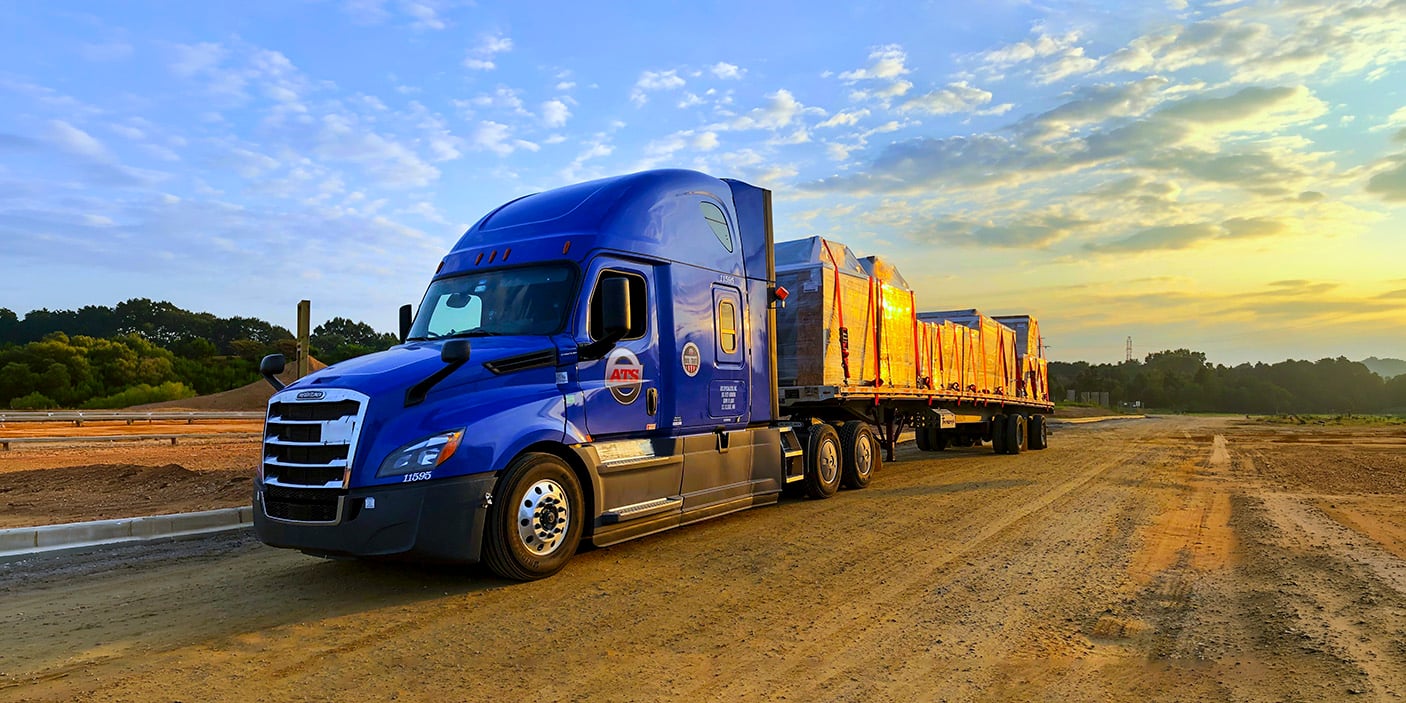

To distribute weight on a flatbed trailer, start by knowing what your truck and trailer weigh when empty. Then, plan where the freight will sit, check your axle weights, and weigh the truck after loading. If the weight is too far forward or back, work with the customer to fix it before you leave.
As a truck driver, you've likely hauled many types of loads on different trailers, so you know that flatbed trailer weight placement can change with each load. There's no single spot that works for every truck, trailer, and piece of freight.
Sometimes the customer may not load you the right way. While most customers do their best, it's your job to make sure your truck is legal before you hit the road.
Part of my job at Anderson Trucking Service (ATS) is to help drivers feel confident about loading and securing their freight. I want to do the same for you.
In this article, I'll share five tips to help you distribute weight on a flatbed trailer, avoid overweight issues, and know what to do when a load needs to be moved.
Why Is Weight Distribution Important?
Proper weight distribution helps keep your truck safe, stable, and within legal weight limits. If too much weight rests on one axle group, you could be overweight — even if your total truck weight is legal.
An overweight violation can lead to fines, delays, and extra costs. You may also need to move the freight or have part of the load removed before you can continue your trip.
That can mean lost time and money.
Learn more about CDL citations and their impact on drivers.
How Much Weight Can a Flatbed Trailer Carry?
On most Interstate highways, the federal gross weight limit for a standard five-axle tractor-trailer is 80,000 pounds without a special permit, subject to other legal limits. Those 80,000 pounds include:
- The tractor and trailer
- Fuel and equipment
- Tarps, chains, straps, and other gear
- The freight you're hauling
Federal Interstate weight limits also include 20,000 pounds on a single axle and 34,000 pounds on a tandem axle group. The Federal Bridge Formula can further limit how much weight your truck can carry.
You may hear drivers talk about 12,000 pounds on the steer axle, 34,000 on the drives, and 34,000 on the trailer tandems. That's a common planning example, not a rule that applies to every truck. Your axle ratings, tires, axle spacing, and route all matter.
A truck can weigh less than 80,000 pounds and still be overweight on an axle group.
Some heavy, non-divisible loads may qualify for overweight permits. Permit rules depend on the state, route, and load. Don't assume a permit is available just because your freight is heavy.
The goal is simple: Know your limits before you load, and check your weights before you leave.

5 Tips for Flatbed Trailer Weight Distribution
Every truck, trailer, and load is different. But these five tips can help you plan your load and avoid problems at the scale.
1. Know What Your Tractor and Trailer Weigh
Before you get loaded, know what your tractor and trailer weigh when empty. You need to know what you're starting with because not every truck and trailer weighs the same. Your empty weight can change based on:
- The type of tractor you drive
- The number of axles
- The size and type of trailer
- How much fuel you carry
- The tools and securement gear on your truck
As a flatbed driver, you may carry tarps, straps, chains, and other equipment. All that gear adds weight.
Your trailer matters, too. A 48-foot flatbed and a 53-foot flatbed may have different empty weights. Steel and aluminum trailers can also weigh different amounts.
How Much Does an Empty Flatbed Trailer Weigh?
It depends on the trailer's size, design, and equipment. Check your trailer's specifications or a scale ticket for its actual weight.
The more your truck and trailer weigh empty, the less freight you may be able to haul.
Before you get to the shipper, know your empty weight and how much freight you can legally carry. Remember to check axle limits, not just the 80,000-pound gross weight limit.
2. Know Where to Place Weight on Your Flatbed Trailer
Where should you put weight on a flatbed trailer?
The best spot depends on your freight, trailer, and axle spacing. Your goal is to place the load so the truck's axle groups stay within their legal limits.
Think of a teeter-totter. When you move weight toward one end, that end carries more of the load. Your truck and trailer work in a similar way. Move too much freight toward the front, and you may put too much weight on the tractor's axles. Move it too far back, and you may put too much weight on the trailer axles.
That's why you need to know how your trailer carries weight.
Flatbed Trailer Weight Distribution Diagrams
These diagrams show how trailer design and axle position affect weight placement.

This diagram shows a weight distribution reference point for a trailer with a 41-foot measurement. Actual load placement depends on the truck, trailer and freight.

This diagram shows how a different trailer measurement changes the weight distribution reference point.
A 48-foot or 53-foot flatbed may need a different loading plan. Trailer length alone won't tell you where to place the freight. You also need to know where the axles are and how much weight they can carry.
Some drivers use the trailer's center point as a starting guide. That can help, but it doesn't mean every load should be split evenly around that point. The weight of your tractor, the trailer's axle spacing, and the shape of the freight all affect the result.
Some trucks also have onboard axle-weight systems that help drivers see how weight is spread across the vehicle. These tools can be useful, but you still need to confirm your legal weights.
When you're not sure where the freight should sit, ask your dispatcher or safety team for help before the load is finalized.
3. Weigh Your Truck After You're Loaded and Secured
Once your flatbed is loaded and secured, check your weight before you get too far down the road. Don't rely on how the load looks. A load can appear centered and still put too much weight on one axle group.
At a scale, check:
- Your steer axle weight
- Your drive axle weight
- Your trailer axle weight
- Your total gross weight
Compare those numbers with the limits that apply to your truck and route. If an axle group is overweight, you'll need to fix the issue before continuing.
That may mean working with the shipper to move the freight. Depending on your equipment and the rules that apply, other approved adjustments may also be possible.
It's much easier to find a problem at a scale near the shipper than at a Department of Transportation (DOT) weigh station.
4. Be Mindful of Heavy Loads
The heavier your freight, the more important load placement becomes.
A 20,000- or 30,000-pound load may leave more room below your gross weight limit than a 45,000-pound load. But that doesn't mean you can place it anywhere on the trailer.
Even lighter freight can cause axle-weight issues if too much weight rests on one axle group. With a heavier load, you have less room for error.
That's why it's important to know the freight weight before the customer starts loading. Ask where the heaviest part of the freight sits. Some loads have an uneven center of gravity, even when they look balanced.
If you're hauling one large piece of equipment, you may need a different loading plan than you would for several smaller pieces.
Don't guess. Work with the shipper and your ATS support team to plan the load.
5. Work With the Customer
The customer knows their freight. You know your truck and trailer. Working together can help you get the load right the first time.
Most customers want to load you the right way. They don't want you coming back because an axle is overweight. But not every customer is used to the type of flatbed you're hauling.
If the load doesn't look right, speak up. Explain where you think the freight needs to sit and why. If you have a scale ticket that shows an overweight axle, share that information. Stay calm and work toward a solution.
If the customer can't help, or you're not sure what to do, call your dispatcher or safety team. They can help you decide what to do next and may be able to work with customer service to resolve the issue.
It's better to fix the load before leaving than deal with an overweight violation down the road.

How Do You Load a Flatbed Trailer for Proper Weight Distribution?
Every load is different, but these six steps can help you plan:
- Know your empty weight. Check what your tractor and trailer weigh before loading.
- Check the freight weight. Find out how heavy the load is and where its weight is centered.
- Plan the placement. Work with the shipper to place the freight based on your trailer and axle spacing.
- Secure the load. Follow the securement rules that apply to your freight.
- Check your axle weights. Weigh the truck after loading and securing the freight.
- Fix any issues. If a weight is too high, work with the shipper and your support team before continuing.
These steps won't replace a load plan for unusual freight, but they can help you catch common problems before they become costly.
What Should You Do if Your Flatbed Is Overweight?
If your truck is overweight, the first step is to find out where the problem is. Check whether the issue is your total gross weight or one of your axle groups.
If one axle group is too heavy, the freight may need to be moved. If the total weight is too high, moving the freight alone won't solve the problem.
Contact your dispatcher or safety team and work with the shipper on a safe, legal solution. After any changes, weigh the truck again.
Don't continue your trip until the load meets the weight rules for your route or you have the required permit and approvals.
Common Questions About Flatbed Weight Distribution
Can a Flatbed Trailer Be Overweight on One Axle but Under 80,000 Pounds?
Yes. Your truck can be under the gross weight limit and still have too much weight on one axle group. Always check the steer, drive, and trailer axle weights.
Where Should the Heaviest Freight Go on a Flatbed Trailer?
It depends on the trailer, axle spacing, and freight. There isn't one spot that works for every load. The goal is to keep each axle group within its legal weight limit.
Does a 53-Foot Flatbed Trailer Need a Different Weight Distribution Plan?
It may. A 53-foot flatbed can have different axle spacing and weight characteristics than a shorter trailer. Check your equipment and load plan rather than relying on trailer length alone.
How Do You Know if a Flatbed Load Is Balanced?
The best way to confirm legal weight distribution is to weigh the loaded truck and check each axle group. A load may look balanced but still place too much weight on one set of axles.
What Should You Do if a Shipper Loads Your Flatbed Incorrectly?
Talk with the shipper about the issue and ask whether the freight can be moved safely. If you need help, call your dispatcher or safety team. Check the weights again after the load is adjusted.
Load, Weigh and Secure Like a Pro
Good flatbed weight distribution starts before you leave the shipper.
Know your equipment. Check the freight weight. Pay attention to where the load sits, and don't be afraid to ask for help.
Every truck and trailer is different. Every load is different, too. The more you understand your equipment, the easier it becomes to spot problems before they turn into delays or violations.
And remember, proper weight placement is only one part of hauling flatbed freight safely. You also need to make sure your load is secured the right way.
Learn more about tools that can help you secure your flatbed loads.
Want to haul flatbed freight with a team that takes safety seriously? Explore OTR flatbed driving opportunities at ATS.