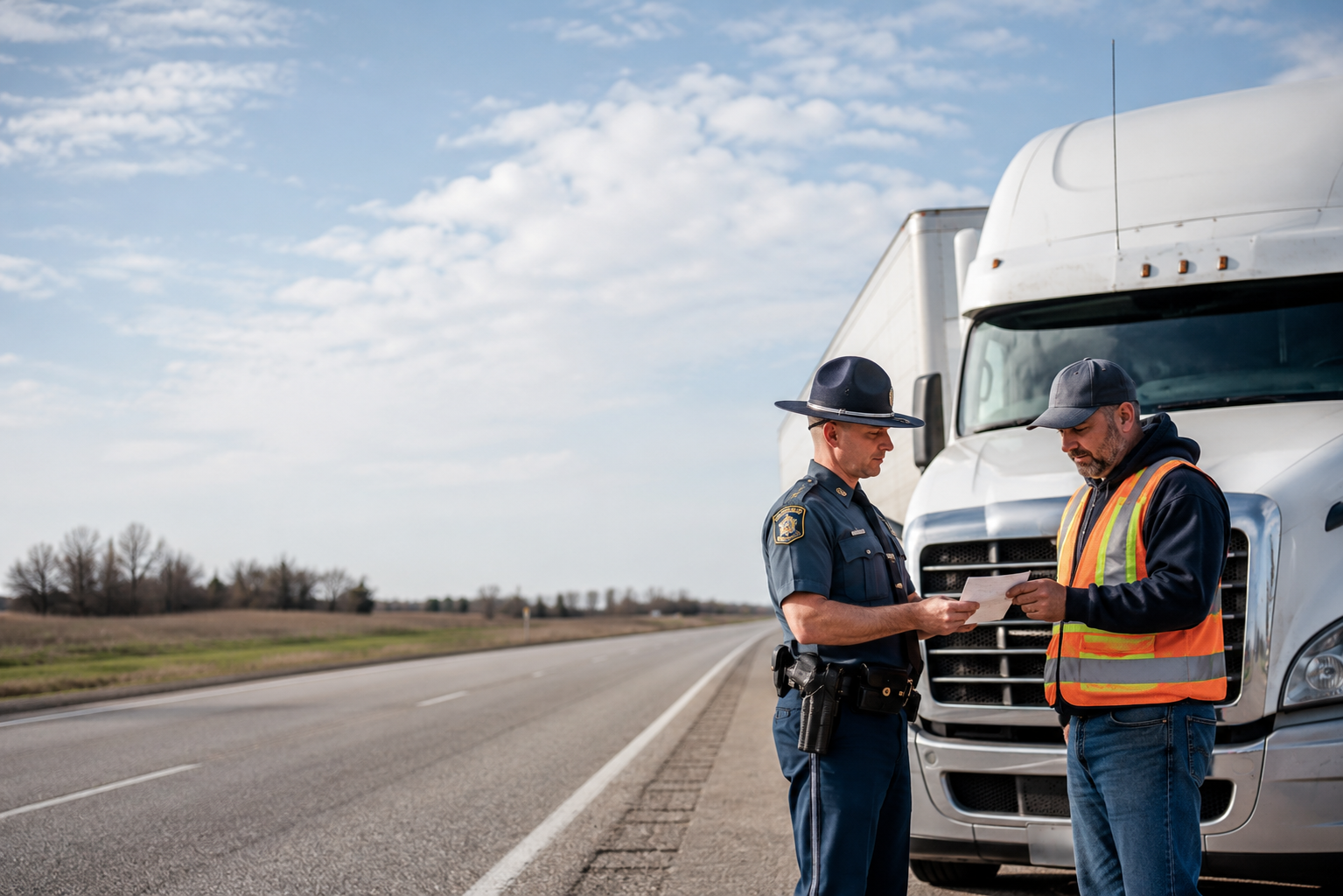

Mistakes happen. That's life. It’s what we do after making a mistake that counts.
At Anderson Trucking Service (ATS), we understand that even the most careful drivers can find themselves facing a safety citation. Whether it's for speeding, using a cell phone while driving, or not wearing a seatbelt, what you do after receiving that citation can have a lasting impact on your driving record, Compliance, Safety, Accountability (CSA) score, and professional reputation.
While ATS never condones unsafe driving or policy violations, we know that life on the road can be unpredictable. That's why it's so important to understand your options and take the right next steps. As safety manager at ATS, that's kind of my thing.
No driver wants to deal with court dates, fines, or the stress of seeing CSA points added to their record. My hope is that this guide will walk you through what to do in these situations and how to protect your professional standing.
Of course, the best way to prevent warnings and citations is to practice safe driving behaviors, regularly perform your pre-trip inspections, and weigh your loads after you secure them. Even still, things happen, and we’re here to help you navigate the process when they do.
Quick Answer: What Happens After a CDL Citation?
A CDL citation is a formal notice issued to a commercial driver for violating traffic laws or federal safety regulations while operating a commercial vehicle. Depending on the violation and the state where it occurred, a citation may require a fine or court appearance and may affect the driver’s Motor Vehicle Record (MVR), Pre-Employment Screening Program (PSP) report, CSA data, employment opportunities, and professional reputation.
Key Takeaways
- A CDL citation is a formal ticket that may require a fine, court appearance, or both.
- A warning does not normally carry a fine, but it may still appear on a driver’s PSP report when documented during a roadside inspection.
- A citation can generally be challenged in court, while a warning usually cannot.
- Paying a citation generally means accepting responsibility for the violation.
- A successful court challenge may allow associated CSA data to be reviewed through the Federal Motor Carrier Safety Administration’s DataQs process.
- Every situation is different, so drivers should review the violation code and the laws of both the issuing state and their home licensing state.
What Is a CDL Citation?
A CDL citation is a formal notice issued to a commercial driver for violating traffic laws or federal safety regulations while operating a commercial vehicle. While not fun, these citations are critical to enforcing safety standards, holding drivers accountable, and protecting everyone on the road.
CDL citations and related safety violations may be tracked by state transportation departments and the Federal Motor Carrier Safety Administration (FMCSA), the federal agency responsible for regulating and overseeing the safety of commercial motor vehicles in the United States.
Common Reasons Drivers Receive CDL Citations
Commercial drivers can be cited for a variety of infractions that compromise compliance or safety. Some of the most frequent include:
- Speeding violations, particularly in construction or school zones
- Hours-of-service (HOS) violations, such as driving beyond legally allowed limits without adequate rest
- Operating a commercial vehicle with expired, suspended, or incorrect documentation
- Failing to meet FMCSA or state cargo securement requirements
- Driving with defective equipment, including faulty brakes, tires, or lights
- Reckless or unsafe driving behaviors, such as improper lane changes, tailgating, or running red lights
- Possession or transport of illegal substances
By understanding the most common CDL violations, you can avoid them and protect both your license and professional reputation.
CDL Citations vs. Warnings: What Every Driver Should Know
So wait, there are warnings and citations? Yep. Not all driving violations are created equal. While they might sound similar, a warning and a citation can have very different long-term impacts on your professional driving record.
What Is a CDL Warning?
A CDL warning indicates that a violation occurred, but no formal ticket was issued. A warning normally does not require a fine or court appearance. However, if a warning is documented during a roadside inspection, it can still appear on your Pre-Employment Screening Program (PSP) report, where motor carriers and safety departments may be able to see it.
What Is the Difference Between a CDL Citation and a Warning?
A citation is more serious. A citation is a formal ticket that generally requires a fine or a court appearance, depending on the severity of the violation. Once the necessary action is taken, a conviction may become part of your Motor Vehicle Record (MVR), one of the main reports employers and insurers use to assess your driving history.
| Feature | CDL Warning | CDL Citation |
|---|---|---|
| Formal ticket issued | No | Yes |
| Fine required | Normally no | Generally, depending on the violation |
| Court appearance | Normally no | May be required |
| May appear on a PSP report | Yes, when tied to a documented roadside inspection | Yes, when connected to inspection or enforcement data |
| May affect the MVR | Normally not as a conviction | Yes, if the citation results in a conviction |
| Can be challenged in court | Generally no | Yes |
It's an important difference. A CDL citation can be contested in court and potentially removed from your record. A warning cannot normally be challenged in court, and inspection data associated with that warning may remain in the FMCSA safety system.
For that reason, some drivers actually prefer receiving a citation because it leaves them the option to fight the alleged violation and, if successful, seek a correction to the related record.
Note: ATS does not advise you to take one route over the other. Avoiding warnings and citations through safe driving practices is always the best approach. When something does happen, the key is to understand how each type of violation may affect your MVR, PSP report, CSA data, CDL, and future driving opportunities.
Fighting a CDL Citation vs. Paying the Fine
When it comes to a CDL citation, you have two choices: fight it or pay it. Remember: you're innocent until proven guilty, so the decision is yours. But it's still worth thinking through carefully. Let's explore how each option works.
Option 1: Fighting the CDL Citation in Court
A stuffy courtroom is not a sought-after destination by any means. Sure, taking a ticket to court can clear your name, but it also costs you time and money. Usually, it requires some sort of a tie. Time in court means time off the road. Even if your dispatcher can get you loads in that area, slow freight could still hurt your paycheck. That's before you even consider legal fees, which could end up costing you more than the fine.
If, on the other hand, you've got dash cam footage or other solid evidence, fighting the CDL citation may pay off. If you win, the citation may come off your record, and associated safety data may be reviewed through the FMCSA’s DataQs process.
DataQs is the FMCSA’s system for requesting a review of federal and state safety data that a driver or motor carrier believes is incomplete or incorrect. A successful court outcome does not automatically update every record, so supporting documentation may need to be submitted through the appropriate process.
Option 2: Paying the CDL Citation
Paying the fine is faster, but you have to remember that, by doing so, you are admitting you're guilty — whether you actually are or not. That can follow you longer than you might think.
Once you pay, the violation may appear on your Motor Vehicle Record and in other records available to motor carriers, potentially affecting CSA-related data and raising red flags with your company. Too many violations could lead to termination and limit your chances with other carriers. In some states, repeat offenses can even cost you your CDL — I'm looking at you, Georgia.
Does Paying a CDL Citation Mean You Admit Guilt?
Paying a CDL citation generally resolves the case by accepting responsibility for the violation rather than contesting it in court. Because procedures and consequences vary by jurisdiction, drivers should review the citation and the applicable state requirements before deciding how to respond.
What Should You Do After Receiving a CDL Citation?
Do your homework. Look up the violation code on your ticket, check the state where you received it, and determine what that offense means in your home licensing state.
If you know you were in the wrong, paying the fine will likely be simpler and cheaper. But if you believe you were cited unfairly, and you have proof, fighting the citation could help protect your record and reputation.
The bottom line is this: every situation is different. Make sure you understand what each choice could mean for your CDL, CSA data, Motor Vehicle Record, PSP report, and future driving opportunities.
Will My Trucking Company Help Me With a CDL Citation?
Depends on who you drive for. Some trucking companies offer little to no guidance, leaving drivers to figure it out on their own. Others take a more hands-on approach and walk drivers through the process.
At ATS, drivers aren't left guessing. Our team works alongside you to explain your options, how the process works, and how a citation could impact your record. Basically, this article in a comforting human form.
Supporting our drivers through difficult situations is something we've taken great pride in for more than 70 years. That level of assistance isn't guaranteed everywhere, so it's important to know what kind of support you'll have when situations like this come up.
How ATS Helps Drivers with CDL Citations
If you're an ATS driver who receives a citation and decides to pay the fine, we're with you. The process works like this:
Scan and submit your citation with your paperwork. That lets our team know you need assistance. From there, Contractor Services will take over.
ATS contacts the appropriate court to confirm the details. Most citations don't include clear instructions on how to plead guilty or submit payment, so ATS will verify what needs to be done.
ATS pays the fine directly once the details are confirmed.
While that may sound great, bear in mind that the amount of the fine will be deducted from your settlement. Depending on the total, it could be taken out in one lump payment or split into smaller deductions. That's a conversation you'll have with your dispatcher.
How Does ATS Citation Support Help Drivers?
- No court calls
- No paperwork confusion
- No rerouting your truck just to pay a fine
At ATS, we're with you from start to finish so you can stay focused on the road.
How CDL Legal Plans May Help Drivers
If your trucking company doesn't offer support after a CDL violation — sorry — there's the option of enrolling in a CDL legal plan, also called a prepaid CDL legal service.
For a monthly fee, these plans connect drivers with a network of attorneys who handle moving violations, traffic tickets, and DataQs challenges. The goal is to help protect your CDL and driving record by reducing or possibly dismissing violations.
But coverage varies.
If you go this route, research your options carefully before you sign up. Many plans cover only certain services, and additional court costs or fees may not be included. You'll want to understand exactly what your plan covers and what it doesn't.
Results can be mixed. Some drivers swear by prepaid legal plans. Others feel they're scams or that the coverage is limited for the cost. Because drivers pay a relatively low fee for these services, there's only so much protection they can realistically provide.
To be clear: this is not a recommendation for or against CDL legal plans. This information is simply intended to give you a better understanding of the resources available if your carrier doesn't offer the kind of hands-on support that other companies, like ATS, provide.
Understanding is power.

Frequently Asked Questions About CDL Citations
What Is the Difference Between a CDL Warning and a Citation?
A CDL warning documents an alleged violation but does not normally require a fine or court appearance. A CDL citation is a formal ticket that may require payment, a court appearance, or both. A citation may be contested in court, while a warning generally cannot be challenged through the court system.
Can a CDL Warning Appear on a PSP Report?
Yes. When a warning is documented as part of a roadside inspection, the inspection and related violation information may appear on the driver’s Pre-Employment Screening Program report. Motor carriers may review a PSP report when evaluating a driver’s safety history.
Does a CDL Citation Go on Your Driving Record?
A CDL citation may become part of your Motor Vehicle Record if it results in a conviction or is otherwise reported under the applicable state process. The effect depends on the violation, the state where it occurred, and the requirements of the driver’s home licensing state.
Can You Fight a CDL Citation?
Yes. A driver can generally contest a CDL citation in the court that has jurisdiction over the violation. Evidence such as dash cam footage, records, photographs, or witness information may help support the driver’s case.
Can a Successful Court Challenge Remove CSA Data?
A successful court challenge may support a request to review related federal or state safety data. Drivers or motor carriers may use the FMCSA DataQs system to request a review when they believe safety data is incomplete or incorrect. Documentation of the court outcome may be required.
Does Paying a CDL Citation Count as Admitting Guilt?
Paying a CDL citation generally means accepting responsibility for the violation instead of contesting it in court. Drivers should review the instructions on the citation and the laws of the issuing state before making that decision.
Will One CDL Citation End a Driver’s Career?
Not necessarily. The effect of a citation depends on the type and severity of the violation, whether it results in a conviction, the driver’s prior record, and the policies of the motor carrier or insurer reviewing that record.
Should You Join a Prepaid CDL Legal Plan?
That decision depends on the plan’s cost, coverage, exclusions, attorney network, and additional fees. Drivers should compare providers, read the terms carefully, and understand what services are and are not included before enrolling.
Last Stop: Choose a Company That Supports You
As a professional driver, your goal is simple: clean inspections with no warnings and no citations. But that can be easier said than done. Again, mistakes happen. That's why it's critical to practice safe driving and understand the CDL regulations and state laws that apply everywhere you run.
If you decide to invest in a prepaid CDL legal plan, do your homework. Research different providers, compare coverage, and read real driver reviews before committing. Remember, not all plans offer the same level of protection.
Equally important is knowing what kind of support your trucking company provides if you receive a citation. Will the company guide you through the process? Offer information? Help with the paperwork? Or leave you to figure it out on your own?
Understanding the difference between a CDL warning and a citation can help you make informed decisions after a roadside stop. While every violation has different consequences, knowing how a citation may affect your CDL, Motor Vehicle Record, PSP report, CSA data, and future employment opportunities can help you protect your professional standing.
At ATS, we believe drivers deserve support. That's guided our mission since our founding by a truck driver in 1955. If you receive a CDL violation, we'll work with you to help you get right side up again and protect your CDL, CSA data, and professional reputation.
Still have questions or want to know more? Contact the ATS driver recruiting team, and we'll be happy to answer any questions you may have.