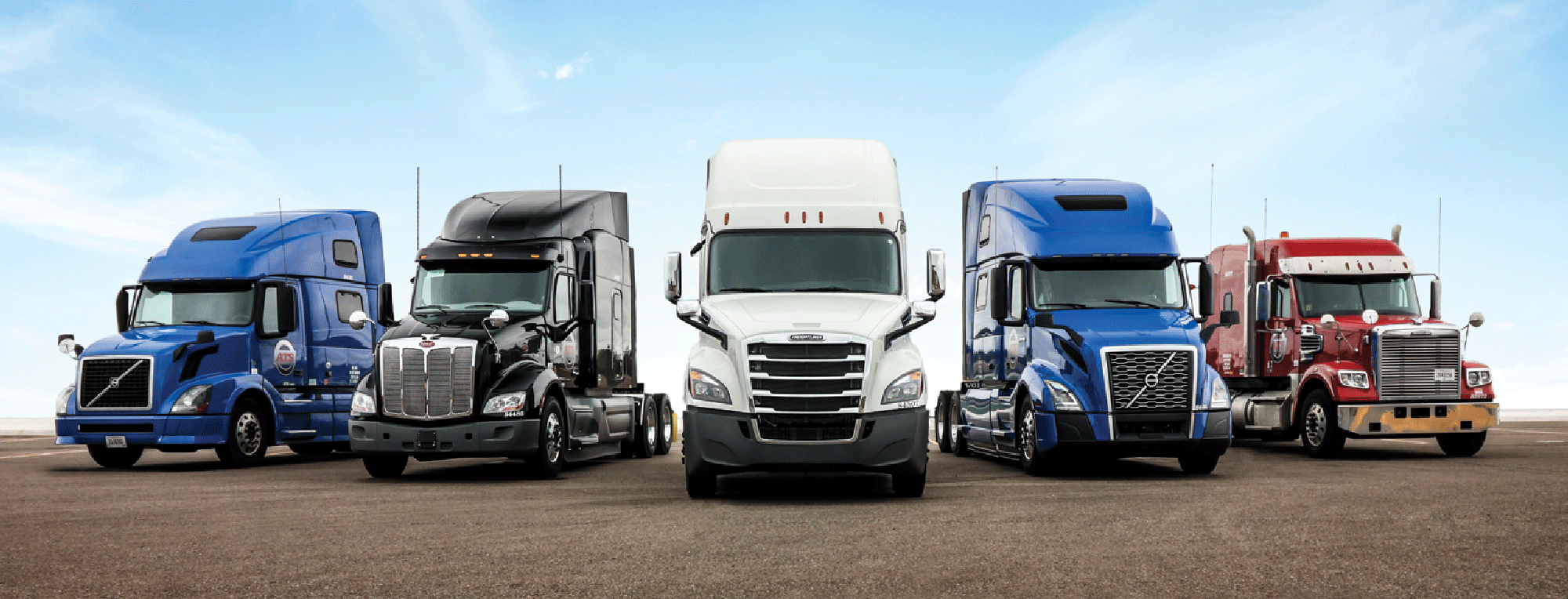

Independent contractors hauling freight with Anderson Trucking Service (ATS) can lease a truck through Competitive Equipment Sales (CES), a business partner of ATS. CES offers 1-, 2-, 3- and 4-year leases with options that can lead to truck ownership. Established ATS lease operators may also qualify for the Top Anderson Performers (TAP) program through Truck Power Leasing.
Before choosing either path, it’s important to understand the costs, equipment, maintenance responsibilities, and contract terms. Here’s what you should know before deciding whether leasing fits your trucking business.
Key Takeaways
- ATS does not lease trucks directly to drivers. Independent contractors hauling ATS freight can lease equipment through Competitive Equipment Sales (CES), an ATS business partner.
- CES offers 1-, 2-, 3- and 4-year leases. Every CES lease includes a buyout option.
- There is no credit check for a CES lease.
- One-year leases require no money down. Longer leases may require $2,000 to $10,000 down.
- Current CES tractor payments range from $580 to $730 per week.
- CES currently leases Peterbilt, Freightliner and Volvo trucks, subject to availability.
- Lease operators are responsible for maintaining their trucks and funding a maintenance account.
- After leasing through CES for at least one year, qualifying ATS lease operators may become eligible for the Top Anderson Performers (TAP) program through Truck Power Leasing.
ATS/CES Truck Leasing at a Glance
| Question | CES Lease Details |
|---|---|
| Who provides the lease? | Competitive Equipment Sales (CES), a business partner of ATS |
| Lease terms | 1, 2, 3, or 4 years |
| Credit check | No |
| Down payment | None for 1-year leases; longer leases may require $2,000–$10,000 |
| Current weekly tractor payment | $580–$730 |
| First two weeks | No lease payment |
| Purchase option | Included in every CES lease |
| Current truck brands | Peterbilt, Freightliner and Volvo |
| Current model years | 2022–2027 |
| Maintenance reserve | 12–23 cents per mile |
| Maintenance responsibility | Lease operator |
| Truck availability | Varies based on inventory at orientation |
Lease terms, equipment, and costs can change. Talk with CES and an ATS Driver Consultant about current options before making a decision.
How Does Truck Leasing Work for ATS Independent Contractors?
ATS and CES play different roles. ATS is a motor carrier that contracts with independent contractors. CES is an ATS business partner that leases and sells commercial equipment. ATS does not operate the lease program.
If you want to become an independent contractor with Anderson Trucking Service (ATS) but don’t own a truck, leasing through CES may be one way to get started.
CES offers short- and long-term leases, different equipment options, and a potential path to purchasing the truck you lease.
If you build experience as an ATS lease operator and later want another path toward truck ownership, you may also become eligible for the Top Anderson Performers (TAP) program through Truck Power Leasing.
How Long Are CES Truck Leases?
CES offers 1-, 2-, 3- and 4-year truck leases. The terms available to you depend in part on which trucks are available when you attend orientation.
CES offers both short- and long-term leases. Short-term leases are subject to a completion bonus.
There is no credit check for a CES lease. One-year leases require no money down. Longer leases often require a down payment of $2,000 to $10,000, depending on the age and features of the truck.
Current tractor payments range from $580 to $730 per week. Trucks with certain features may cost more. For example, a tractor with an auxiliary power unit (APU) costs an additional $50 per week.
You won’t be charged a lease payment during the first two weeks of your lease.
Can You Buy a Truck You Lease Through CES?
Yes. Every CES lease includes a buyout option.
To buy your leased truck, you must be current on your payments and notify CES at least 30 days before the purchase. You’ll then make a balloon payment based on the amount still owed on the truck.
This gives you one potential route from leasing to truck ownership.
Established ATS lease operators may have another option through the TAP program, which we’ll explain later in this article.
What Trucks Can ATS Independent Contractors Lease Through CES?
CES currently offers Peterbilt, Freightliner, and Volvo trucks from model years 2022 through 2027, but specific trucks can’t be guaranteed before orientation.
New trucks have minimal mileage. Older equipment may have more than 500,000 miles.
Depending on inventory, you may find:
- Mid- or raised-roof models
- Single or double bunks
- Different storage configurations
- Trucks with APUs
CES can’t guarantee that a specific tractor or model will be available when you arrive for orientation. It’s helpful to have more than one option in mind.
Equipment is leased as-is, but every truck must pass a 125-point inspection before being leased to another driver. You also have the right to review the truck’s previous maintenance records.
Tractors have a manufacturer’s warranty of one year or 100,000 miles. Major engine components have five years or 500,000 miles of coverage (up to specific model).
CES also provides a 30-day bumper-to-bumper coverage on short-term leases.
Related: Leasing New vs. Used Semi-Trucks: Pros and Cons You Need to Know
What Features Come With CES Lease Trucks?
All CES lease tractors include an inverter rated at 1,500 watts or higher and an Espar bunk heater.
Drivers may add items such as:
- Refrigerators
- Plug-and-play lights
- Televisions
- Microwaves
- CB radios
APUs are installed on select trucks. They are most common on new tractors and trucks available for long-term leases. Tractors also include a separator curtain between the bunk and cab and window curtains in the bunk area.
CES limits each tractor to 525 engine hours per month. Engine hours above that limit cost $3 per hour.
What Safety Equipment Is Included?
CES lease trucks are governed at 68 miles per hour and include front-facing Lytx cameras.
The cameras record continuously, but footage isn’t monitored unless an event is triggered or an accident occurs.
Most trucks also have accident-mitigation technology. Depending on the truck, that may include:
- Adaptive cruise control
- Automatic braking
- Lane-departure warnings
Who Pays for Maintenance on a CES Lease Truck?
As the lease operator, you’re responsible for keeping the truck in good working order and paying its maintenance costs.
CES uses a maintenance account to help you prepare for those expenses. Currently, 12 to 23 cents per mile is deducted to fund the maintenance account. The money in that account can be used for truck maintenance expenses.
CES also offers programs for tires, brakes, and emissions-related preventive maintenance. An oil-change program is included with every lease. These programs can help cover routine maintenance without requiring you to take as much money from your maintenance account or pay out of pocket.
DOT inspections are required each year. You’ll receive a message when your inspection is due and can schedule it with the maintenance team.
If you have trouble on the road, ATS has a dedicated road service department and extended coverage team. Drivers also have access to shops across the country and ATS facilities in St. Cloud, Minnesota; Porter, Indiana; and Houston, Texas.
What Happens if Your Lease Truck Breaks Down?
Lease payments generally continue when your truck breaks down.
When available, the company will work with you to find a rental option. An extended breakdown may qualify for a pause in lease payments.
This is an important cost to consider before leasing. A truck payment is only one part of operating your business. You should also be prepared for maintenance costs and periods when your truck may not be moving.
What Costs Come Out of a Lease Operator’s Settlement?
A lease operator’s expenses can include the weekly tractor payment, maintenance reserve, insurance, HVUT deduction, and other operating costs. Fuel and maintenance responsibilities also affect what you take home.
| Expense | What to Know |
|---|---|
| Tractor payment | Currently $580–$730 per week |
| APU | Additional $50 per week when applicable |
| Maintenance account | 12–23 cents per mile |
| HVUT | $11 deducted from your weekly settlement |
| Insurance | Physical damage, occupational accident, and bobtail insurance are required |
| Maintenance | Lease operator is responsible |
| Excess engine hours | $3 per hour above 525 engine hours per month |
Insurance costs are deducted weekly from your settlement.
Before you sign a lease, look beyond the weekly truck payment. Understanding all of your operating costs can help you decide whether the business model fits your financial goals.
What Contract Rules Should Lease Operators Know About?
CES leases include several rules covering equipment changes, insurance, payments, early termination, and where the truck must be returned.
You can’t alter the truck without prior written approval. Unauthorized changes can result in additional charges. Advertising and insignia require written approval as well.
Drivers may have one passenger and one pet in the truck at a time with an approved written request.
You must maintain physical damage, occupational accident, and bobtail insurance throughout the lease.
A lease can default if payments aren’t made within 10 days of their due date, maintenance debts aren’t paid, the lessee’s business ends, or the equipment is leased or sold to another party.
If your contract ends during the first six months, a two-week lease-payment penalty applies.
The equipment must also be returned to CES in St. Cloud, Minnesota. If you return it somewhere else, you’re responsible for the cost of recovering the truck.
Understanding these terms before you sign can help you decide whether leasing fits your business and financial goals.
What Happens When You’re Ready to Move From Leasing Toward Truck Ownership?
Leasing can be a long-term business model for some independent contractors. For others, it can provide experience managing a truck and running a business before moving toward ownership.
ATS lease operators have two ownership paths to understand.
Option 1: Buy Out Your CES Lease
Every CES lease includes a buyout option.
If you like the truck you’re operating and want to own it, you may be able to purchase it by paying the remaining balance through a balloon payment.
You must be current on your payments and notify CES at least 30 days before purchasing the truck.
Option 2: Explore TAP Through Truck Power Leasing
If you’ve successfully leased through CES for at least one year, you may qualify for the Top Anderson Performers (TAP) program.
TAP is offered by Truck Power Leasing, a division of Momentum Truck Group. It's designed for qualifying ATS lease operators who want to continue building their business and potentially move toward truck ownership.
TAP isn’t intended for drivers who are just starting to lease. It's for established lease operators who have shown that they can safely operate equipment and manage the financial responsibilities of their business.
Who Is Eligible for the TAP Program?
TAP isn’t automatically available to every ATS lease operator.
To qualify, you must:
- Have leased through Competitive Equipment Sales (CES) for at least one year.
- Have a strong safety record.
- Demonstrate solid financial management with ATS.
- Receive approval from your Driver Manager before beginning the application process.
- Plan to continue hauling freight with ATS.
Your Driver Manager is the first person to talk to if you’re interested in TAP. They’ll review relevant safety and financial information to determine whether you may be a fit for the program.
After your Driver Manager signs off, Truck Power Leasing reviews your CES leasing history as part of determining whether you meet its program requirements.
How Does the TAP Program Work?
For qualifying lease operators, TAP generally follows five steps.
- Talk to your Driver Manager. Your Driver Manager must approve your eligibility before you apply.
- Apply through Truck Power Leasing. ATS confirms your qualifications before you move forward.
- Select your truck and lease terms. TAP offers late-model Freightliner and Western Star equipment.
- Prepare to take delivery. Truck Power Leasing prepares the truck so it is road-ready.
- Continue operating with support. You continue hauling ATS freight and receiving settlements through ATS while receiving leasing support from Truck Power Leasing.
At the end of the lease, you may have several options depending on your long-term business plan. You may decide to purchase your truck or lease another new truck.
What Trucks Are Available Through TAP?
TAP gives qualifying lease operators access to late-model Freightliner and Western Star trucks.
One key difference between TAP and a CES lease is truck selection. With TAP, you can select a truck through Truck Power Leasing. The team also works with you to make sure the truck has the right specifications for the freight you haul.
TAP trucks include a factory-installed APU. They also include an up to five-year/500,000-mile warranty on major components.
Drivers are required to fund a maintenance account to help cover repair costs.
What Are the Benefits of TAP?
For an established ATS lease operator interested in truck ownership, TAP offers several potential advantages:
- Lower upfront costs: TAP is designed to offer a lower entry point than traditional truck financing. Actual payments depend on the truck and market conditions.
- Flexible end-of-lease options: You may be able to lease another truck, purchase your current truck with a balloon payment or finance the remaining balance.
- Late-model equipment: Drivers can choose from Freightliner and Western Star trucks.
- Factory-installed APU: TAP equipment includes an APU.
- Warranty protection: Major components have an up to five-year/500,000-mile warranty.
- Dedicated support: Truck Power Leasing provides a leasing representative who can assist you during the lease.
- Service network: Drivers can access Freightliner and Western Star dealerships nationwide through the Truck Power Leasing and Momentum service network.
- Tax preparation support: Truck Power Leasing helps drivers organize paperwork for tax filing.
CES vs. TAP: What’s the Difference?
| CES Lease | TAP | |
|---|---|---|
| Best suited for | Independent contractors beginning or continuing to lease equipment while hauling ATS freight | Established ATS lease operators interested in moving toward truck ownership |
| Provider | Competitive Equipment Sales | Truck Power Leasing |
| ATS relationship | CES is an ATS business partner | Available to qualifying ATS drivers through Truck Power Leasing |
| Experience requirement | No previous CES lease required | At least one year leasing through CES |
| Equipment | Peterbilt, Freightliner and Volvo, subject to availability | Late-model Freightliner and Western Star |
| Truck selection | Depends on inventory at orientation | Drivers can select a truck suited to their operation |
| Ownership path | Buyout option included in every lease | Multiple end-of-lease options, including purchase with a balloon payment or financing the remaining amount |
Is Leasing a Truck a Good Fit for You?
A truck lease may fit an independent contractor who wants to run a trucking business but doesn’t currently own equipment. It also comes with responsibilities that a company driver doesn’t have.
As a lease operator, you need to be comfortable managing expenses, maintaining your truck, and making business decisions. Your truck payment is only one expense. Fuel, maintenance, insurance, and other costs can affect what you take home.
Leasing may be worth exploring if you want more responsibility for your trucking business and are prepared to manage its costs.
It may not be the right fit if you prefer the more predictable expenses and maintenance responsibilities that come with being a company driver.
Before deciding, look beyond the weekly truck payment. Think about your financial goals, business experience, maintenance responsibilities, and whether truck ownership is something you eventually want.
Is TAP the Right Next Step for You?
Owning a truck isn’t the right goal for every driver.
TAP is intended for established lease operators who want to take on the added responsibilities of truck and business ownership.
It may not be the right fit if you:
- Plan to stop hauling freight with ATS
- Don’t want to own a truck
- Don’t want the added responsibilities of running a trucking business
Owner-operators have to think beyond driving. Running a business means managing expenses, maintaining equipment, handling paperwork, preparing for taxes, and making decisions that keep the operation profitable.
If ownership is your goal, your experience leasing through CES can help you learn to manage many of those responsibilities before taking the next step.
Frequently Asked Questions About ATS and CES Truck Leasing
Does ATS lease trucks directly to drivers?
No. ATS is a motor carrier that contracts with independent contractors. Competitive Equipment Sales (CES), an ATS business partner, leases and sells commercial equipment. Independent contractors hauling freight with ATS may lease a truck directly from CES.
Does CES require a credit check?
No. CES leases do not require a credit check.
How much does a CES truck lease cost per week?
Current tractor payments range from $580 to $730 per week. A truck with an APU costs an additional $50 per week. Lease costs can change, so confirm current pricing before making a decision.
Do I need a down payment for a CES lease?
One-year CES leases require no money down. Longer leases often require a down payment of $2,000 to $10,000, depending on the truck’s age and features.
Can I buy the truck I lease from CES?
Yes. Every CES lease includes a buyout option. You must be current on your payments and give CES at least 30 days’ notice before purchasing the truck. A balloon payment based on the remaining balance is required.
Who pays for maintenance on a CES lease truck?
The lease operator is responsible for maintaining the truck. CES currently deducts 12 to 23 cents per mile to fund a maintenance account that can be used for maintenance expenses.
What happens if my lease truck breaks down?
Lease payments generally continue during a breakdown. When available, the company will work with you to find a rental option. Extended breakdowns may qualify for a pause in lease payments.
Can I choose my CES lease truck before orientation?
CES can’t guarantee a specific truck before you arrive. Available equipment depends on current inventory, so it’s best to have several options in mind.
Can I bring a passenger or pet?
Drivers may have one passenger and one pet in the truck at a time with an approved written request.
Can an ATS lease operator eventually own a truck?
There are two potential paths described here. Every CES lease includes a buyout option. Qualifying ATS lease operators who have leased through CES for at least one year may also become eligible for TAP through Truck Power Leasing.
Choose the Path That Fits Your Trucking Business
There isn’t one equipment path that fits every independent contractor.
A CES lease gives you an opportunity to operate a truck while hauling ATS freight. You can choose from available lease lengths and equipment, and every lease includes a buyout option.
If you successfully lease through CES for at least one year and decide truck ownership is your next goal, TAP may provide another path through Truck Power Leasing.
Before choosing either option, understand the numbers, maintenance responsibilities, contract terms, and long-term commitment. The right choice depends on the kind of trucking business you want to build.
If you’re already hauling with ATS and want to explore TAP, talk with your Driver Manager about eligibility.
If you’re considering becoming an independent contractor with ATS, explore current ATS lease opportunities and talk with an ATS Driver Consultant about what the business could look like for you.
Important clarification: ATS, Inc. and ATS Specialized Inc. are motor carriers that employ company drivers and contract with independent contractors, lease operators and owner-operators. Competitive Equipment Sales, Inc. (CES) is a sister company that leases and sells commercial equipment. ATS does not operate a lease program. Independent contractors interested in leasing may work directly with CES.